
Last spring, Wheeling Heritage got the call that a traveling exhibit had stayed on the road a little longer than planned. Not in a bad way—just in the way local history sometimes does when it’s being well cared for. After more than a decade on display in Wellsburg at the Brooke County Historical Museum, it was time to take a closer look and figure out what it would take to bring It’s Wheeling Steel back to Wheeling and give it a permanent home at the Wheeling Artisan Center alongside the rest of our Wheeling Industry display.
We went as a team to see it in person—evaluating the condition of the panels, measuring, and talking through what transportation and installation would actually require. As is often the case with preservation work, the solution came down to people willing to step up and help.
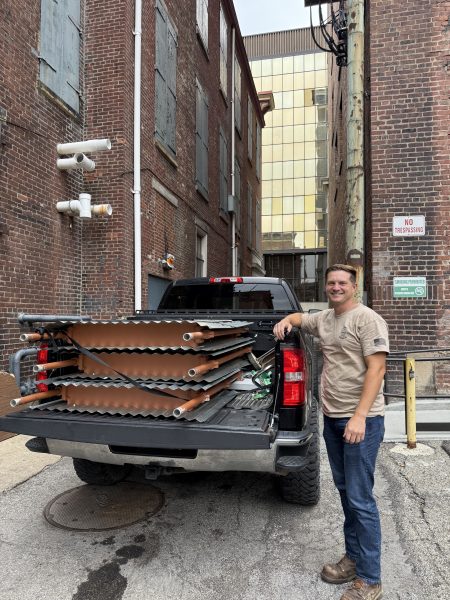
A huge shout-out goes to Kyle Kull, LIUNA Organizer, for the use of his pickup truck, his problem-solving brain, and just the right amount of manpower (with my help, of course). Eric Heinowitz of Tipping Point Real Estate Development stepped in to carefully disassemble the exhibit so it could be reinstalled correctly. Piece by piece, it came back together—and after a lot of coordination, measuring, and teamwork, It’s Wheeling Steel was hung, secured, and ready to be seen.
Now that it’s here, it’s worth taking a moment to revisit what It’s Wheeling Steel was all about.
When Wheeling Took to the Air
Long before streaming, social media, or even television variety shows, Wheeling found a national audience through radio.
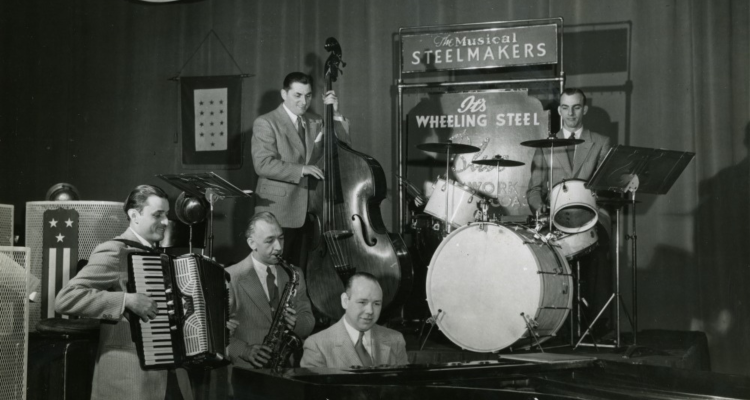
It’s Wheeling Steel first aired on November 8, 1936, broadcasting live from WWVA studios in downtown Wheeling. The weekly half-hour musical and variety program was billed as radio’s original “employee family broadcast.” Every performer—musicians, singers, announcers, and writers—was either a Wheeling Steel employee or an immediate family member.
The show featured the people who made the city run: steelworkers, clerks, stenographers, and mill hands who traded their workday roles for microphones. A quartet of singing millmen. A saxophonist from the Yorkville machine shop. A singing stenographer from the advertising office. Tin mill workers, pipe mill clerks, an accordionist from Wheeling Corrugating—and even a 62-year-old payroll manager who served as master of ceremonies.
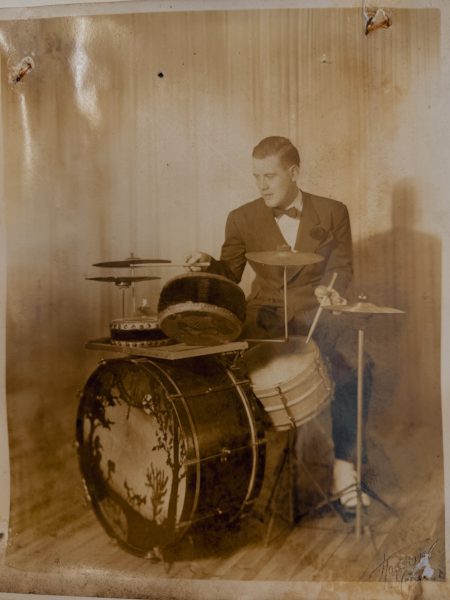
At the heart of the program was The Musical Steelmakers, a 16-member orchestra made up entirely of Wheeling Steel employees. Their performances—light classics, popular songs, and show tunes—gave the program a polished sound while keeping it unmistakably local.
Each broadcast opened with the sound of a mill whistle.
From Local Experiment to National Phenomenon
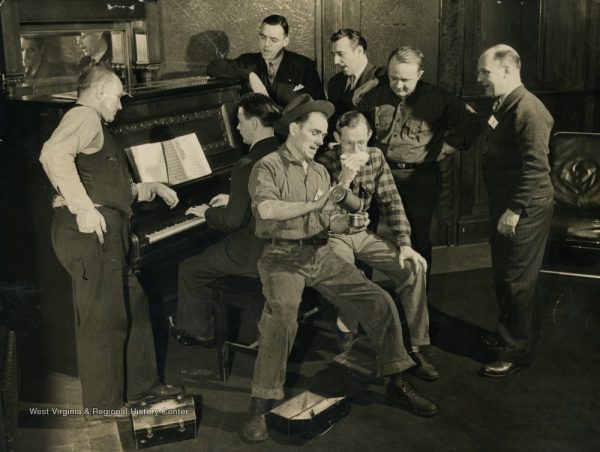
The idea behind It’s Wheeling Steel came from John L. Grimes, advertising director for Wheeling Steel Corporation. At a time when radio had become the country’s shared living room, Grimes believed the medium could do more than sell steel—it could highlight the people behind it.
What began as a morale-boosting experiment quickly outgrew local airwaves. By the late 1930s, the program joined the Mutual Broadcasting System and later NBC’s Blue Network, airing coast to coast on more than 84 stations. Through shortwave radio, it reached American servicemen overseas during World War II.
In 1938, Life magazine featured the program in a national photo spread. By 1941, it ranked fifth in national listener ratings.
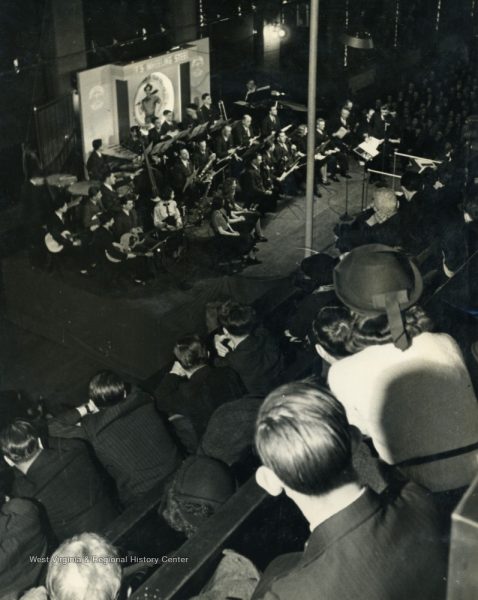
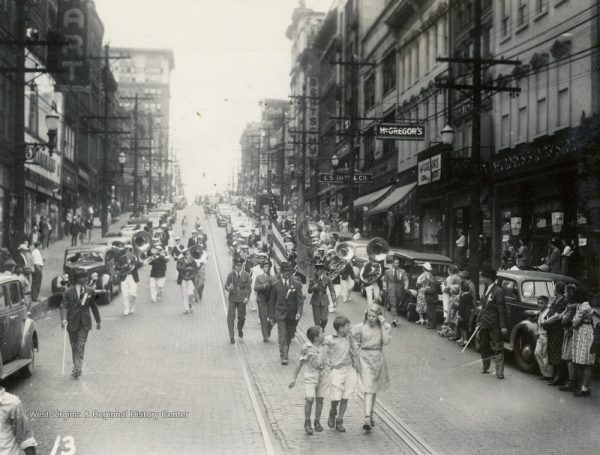
The show’s peak came on June 25, 1939, when It’s Wheeling Steel broadcast live from the New York World’s Fair. A crowd of 26,000 gathered—the largest audience the show ever drew. When the performers returned to Wheeling, they were greeted with a parade. Earl Summers Jr. later recalled, “It was like Lindbergh coming home from Paris.”
During World War II, the program took on a patriotic tone, urging listeners to buy war bonds and support the war effort. One broadcast from West Virginia University’s field house raised $663,000 for a “Buy a Bomber” campaign.
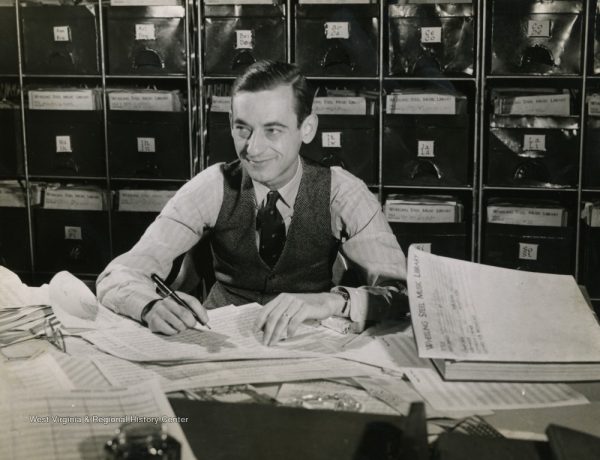
Across 326 programs, more than 1,000 individual singers and musicians were featured. Some of the amateur performers later went on to careers in music and production. Arranger Lew Davies would eventually help shape The Lawrence Welk Show, carrying elements of Wheeling’s experiment into early television.
The program aired its final broadcast on June 18, 1944, largely due to Grimes’s declining health—but its influence endured.
Bringing the Sound Back Home
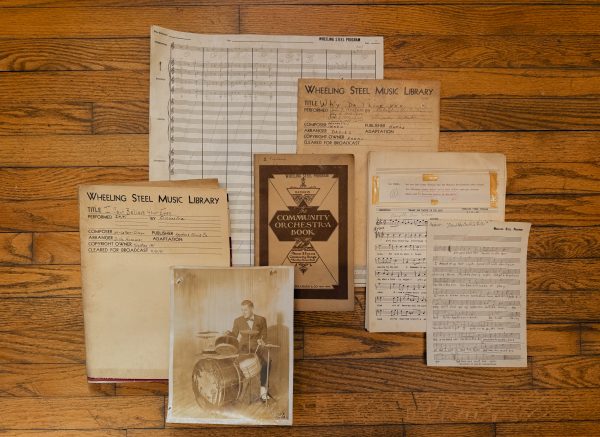
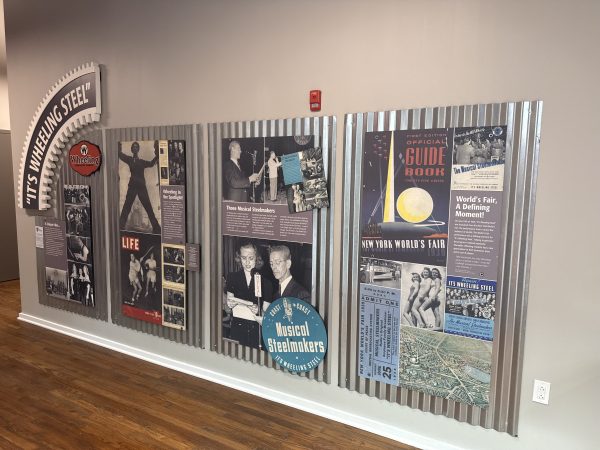
The It’s Wheeling Steel exhibit brings together historic photographs, sheet music, records, and memorabilia documenting a radio program that once carried Wheeling’s voice across the country. Its audio component has been updated from a motion-activated radio to a QR code, allowing visitors to hear the familiar opening mill whistle and an eight-minute recording preserved from records discovered at the Beech Bottom mill.
Standing in front of the display, visitors can read about It’s Wheeling Steel and hear it—the voices, the music, and the sound that once introduced Wheeling to the nation.
It’s Wheeling Steel was never just entertainment. It proved that the people who powered the mills also powered the culture—and that when Wheeling was given a microphone, it had something worth saying.
Now that story is home again, and ready for the next generation of listeners. You can find more artifacts from It’s Wheeling Steel‘s history at WVU’s West Virginia and Regional History Center‘s archives.