

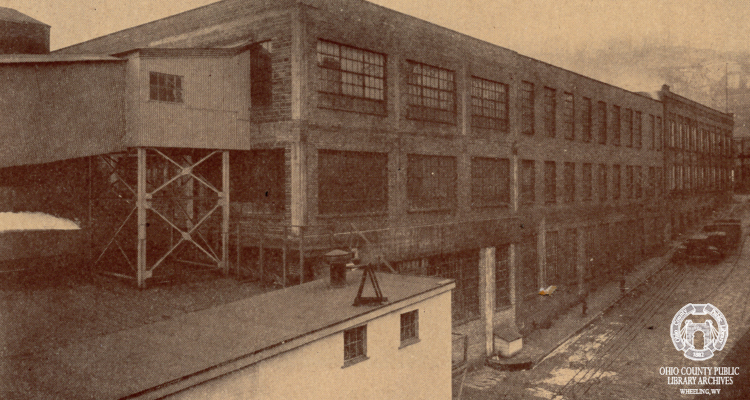
Textiles were once a cornerstone of Wheeling’s industrial growth. In the 19th and early 20th centuries, factories producing cotton, wool, and silk helped shape the city’s economy and identity. Among the most notable was J. L. Stifel & Sons, founded in 1835 by German immigrant Johann Ludwig Stifel. Starting as a small dye shop with a single piece of cotton, Stifel eventually built one of the nation’s largest calico printing operations. Its indigo-dyed patterns were shipped across the country and abroad, earning Wheeling a reputation for quality textile production.
The Wheeling Silk Manufactory contributed luxury fabrics like satin, velvet, and dress silks, while the Bradley & Eckhart Wool Mill produced flannels, denim, and yarns for knitting and weaving. These enterprises provided early industrial employment for women, offering opportunities to handle stitching, dyeing, and weaving outside the home. Textile work was both a craft and a livelihood, tightly woven into the social and economic fabric of the city.
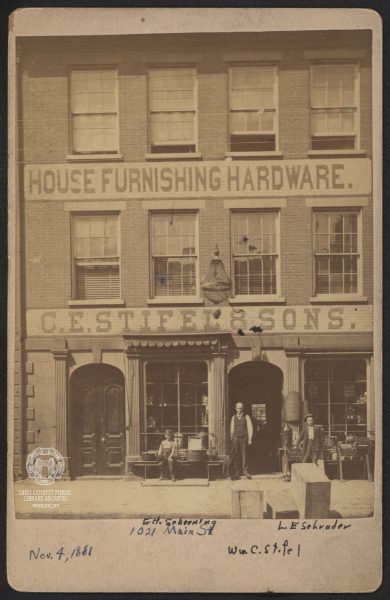
1021 Main Street.
Pictured from left to right are: E. H. Schoening, Wm. C. Stifel, and L. E. Schrader.
Courtesy of OCPL Archives
Wheeling’s mills thrived thanks to strategic access to the Ohio River and rail lines, which allowed for easy transport of raw materials and finished goods. Supporting industries like dye houses, thread suppliers, and pattern shops created a robust local ecosystem that fostered both innovation and community growth.
By the mid-20th century, global competition, synthetic fabrics, and rising production costs led to the decline of Wheeling’s textile industry. The closure of Stifel & Sons in 1957 marked the end of an era, yet the ingenuity, craftsmanship, and skill developed in these factories left an enduring legacy.
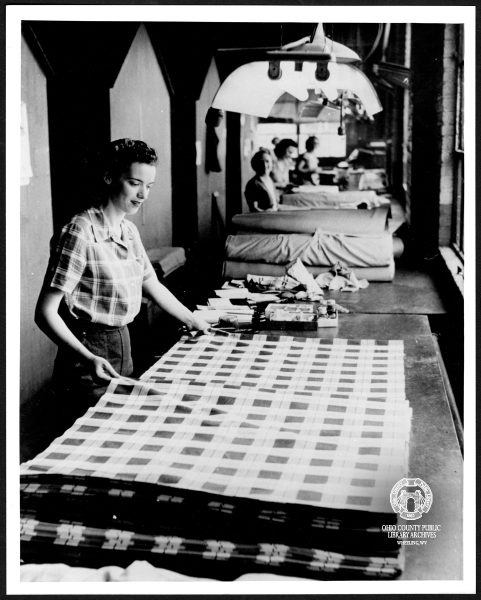
Kay Kinnebaugh performs inspections on fabric at the J. L. Stifel & Son Calico Works Factory in North Wheeling (Main and 4th Streets)
Courtesy of the OCPL Archives
Evolution of Textile Craft and Skills
Even as industrial textile manufacturing declined, the traditions of skill, precision, and creativity persisted. Hand-sewing, dyeing, and artisan workshops preserved the knowledge of Wheeling’s textile past. Techniques once necessary for mass production became avenues for artistic expression, connecting generations of makers with the city’s industrial roots.
This evolution demonstrates that textiles in Wheeling were never just about fabric—they represented creativity, problem-solving, and community engagement. These values now live on in local arts initiatives that celebrate both history and innovation.
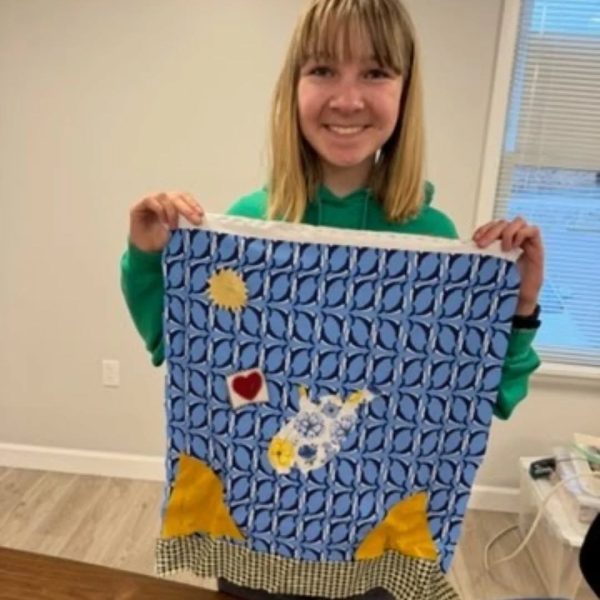
Stitching the Past into the Present: SCRAP Flag Sewing Exhibit
This spring, Wheeling’s textile story comes alive in a modern exhibit. The SCRAP Flag Sewing Competition Exhibit at the Wheeling Artisan Center (March 23–April 22, 2026) showcases student and community-made fabric flags created during last year’s competition. Participants transformed fabric remnants into vibrant pieces, reflecting the resourcefulness and craftsmanship that defined Wheeling’s historic mills.
The project is a collaboration between Explore the New Manufacturing, Wheeling Heritage, and Edgington Studio, bridging traditional textile skills with contemporary creativity. Visitors can also participate in a Hand Sewing & Mending Workshop on April 21 from 5:30-7pm, connecting directly with Wheeling’s rich fabric traditions.
From the bustling factory floors of the 19th century to the gallery walls today, Wheeling’s textile heritage continues to inspire creativity, skill, and community pride. Just proving that the threads of the past still run strong in the city’s present.