


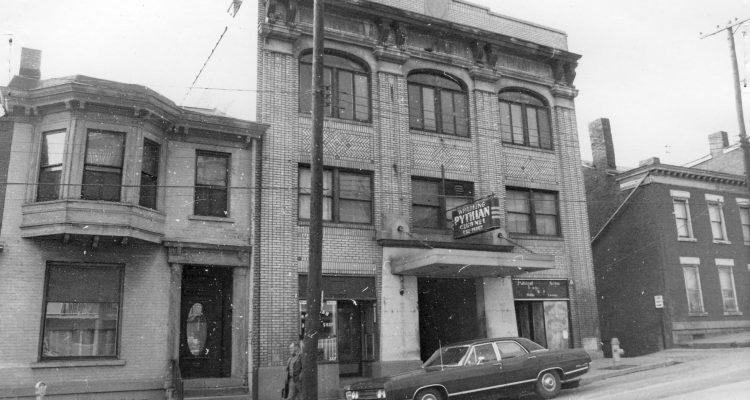
To better understand the history of the Pythian Building in Wheeling, West Virginia, let’s take a dive into the Pythian Fraternal Order and what led to the current building’s status as the last standing physical remnant of the Order in Wheeling.
What is the Order of the Knights of Pythias?
An international organization, the Order of the Knights of Pythias is a nonsectarian (meaning not affiliated with any religious or political groups) fraternal order. The first to be chartered by an Act of Congress in the United States, the order was established in 1864 in Washington D.C. by a man named Justus Rathbone who “believed that it might help to heal the wounds and allay the hatred of civil conflict.” The Order’s three official principles of friendship, charity, and benevolence are inspired by the friendship between Damon and Pythias, as portrayed in a play of the same name by Irish poet John Banim.
The West Virginia charter was granted in 1870, and currently has 10 local lodges located throughout the state (1).
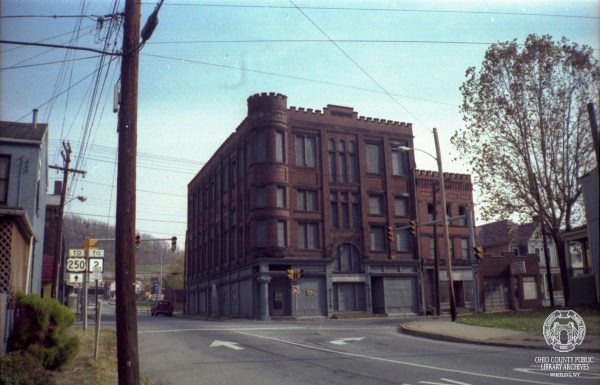
The Pythian Castle
The first building to be erected for the sole purpose of the Wheeling Order of Pythias, the Pythian Castle was built on the corner of Chapline Street and 27th between 1895 and 1896. It was designed to be the meeting house of the Black Prince Lodge No. 19, just one of five different lodges that had been located in Wheeling at the time. The land had previously been the site of the Quincy Foundry. The four story building had been designed by Hamilton & Son architects and contained an auditorium called “the Castle Theatre” from 1909-1926, lodge rooms for members, office space and even a dining hall on the top floor.
In 1900, the lodge had 357 members but by the 1950s, membership had dropped to just 42 men and the building was primarily used as a gaming parlor with poker games and nickel slots. The last living Order member passed away in 1980, and afterwards the building was sold. Estimated restoration costs were $50,000, roughly $205,000 today, and were deemed too high. The 96-year-old building was eventually demolished in 1991 (2).
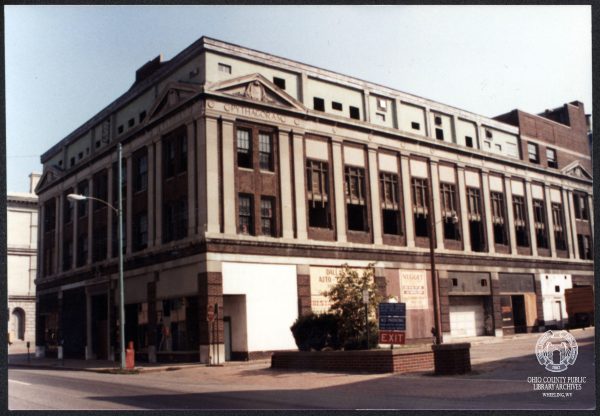
The Pythian Lodge Building
Built for another Pythian lodge in 1927, the Pythian Lodge Building was designed in the Renaissance/Beaux-Arts style, and was decorated with pediments depicting Mythological and Classical motifs. Three of these pediments were preserved when the building was demolished in 1989 and used to form gateways into College Square Plaza in front of West Virginia Northern Community College, which is still currently housed in the old B&O Railroad Terminal Building (3).
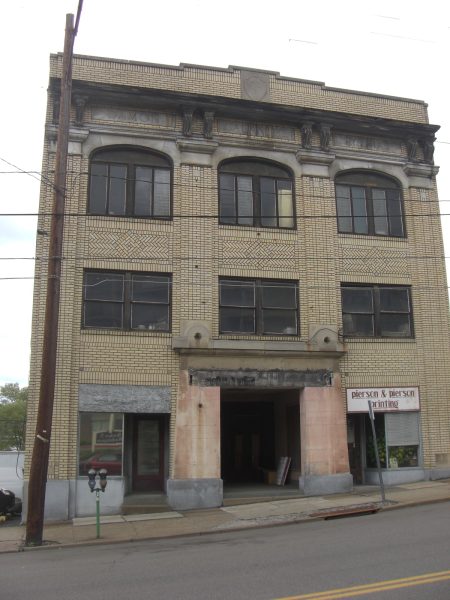
The African American Pythian Building
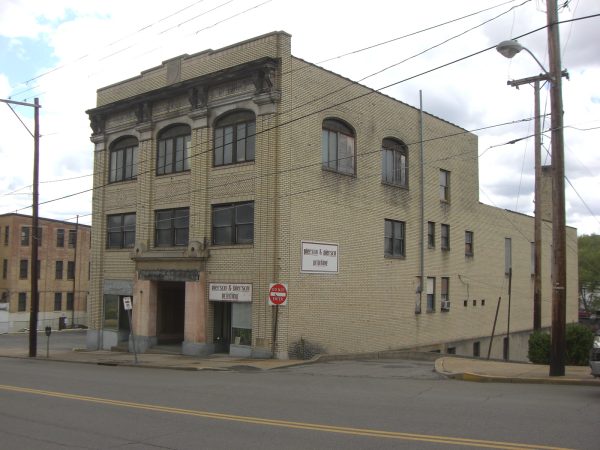
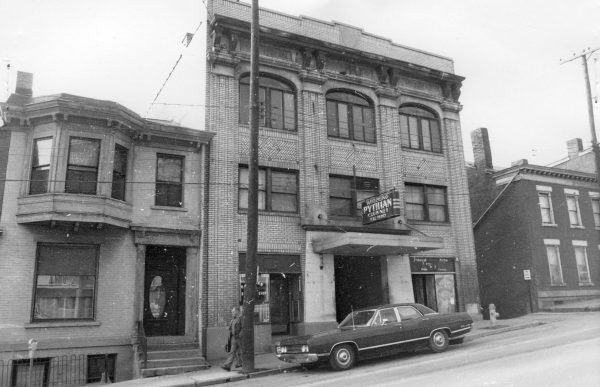
Last to be built and the only one still standing, the African American Pythian Building at 1025-27 Chapline Street was designed by the Wheeling Pythian Association and Samuel Plato of Louisville, Kentucky, a prominent African American contractor. Following a period of frustration where the Pythian Order had been unable to build due to real estate barons thwarting funding in an attempt to force a sale of the well-located land and existing properties, the funding to build the structure came from a loan of $55,000 from R. H. Rutherford, who was President of The National Benefit Life Insurance Company at the time (4).
Built during the Segregation in 1928, the building aimed to be a “modern office building” specifically for the local Black community, with stores, a theatre, and an auditorium housed within its three floors. It operated as such into the 1950s, with businesses including the Fedo Theatre, a restaurant called The Palm Garden, the Rose Ballroom, a barbershop, and a billiard parlor, among others (5).
A Fun Fact
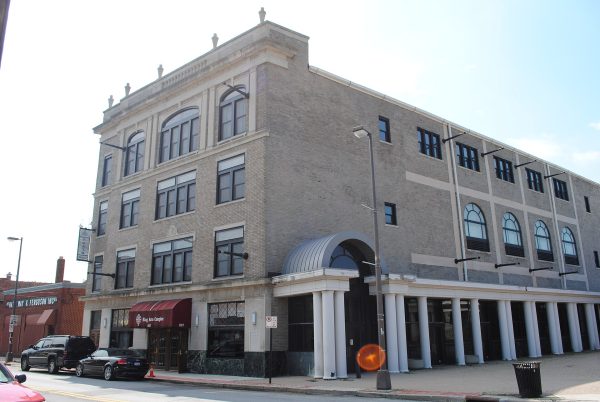
The African American Pythian Building has a twin, designed by the same contractor (Samuel Plato) about two years prior.
The Martin Luther King Jr. Performing and Cultural Arts Complex was built in 1925 as the Pythian Temple in the Colonial Revival style. The building was restored and reopened as the King Arts Complex in 1987, was vacated in 2019, then resumed operations in 2021. The building has seen notable, historic figures as performers including Cab Calloway, Count Basie, Duke Ellington, and the Cotton Club Dancers (6).
Many in Wheeling still hope to see the current Pythian Building preserved and restored, allowing it to continue to be the last standing physical remnant of the history and legacy of the Order of the Knights of Pythias in Wheeling.
