


Written by Wheeling Park High School’s Gavin Forgét. Gavin is a contributing writer to The Park Press.
Each day, more than 26,000 people who call Wheeling, West Virginia home walk and drive through neighborhoods layered with stories they may never think twice about. From Woodsdale to the National Road corridor, this city, built by people seeking opportunity, holds a past that still shapes the way we live today.
At Wheeling Park High School, History of Wheeling teacher Mr. Stanton works to make that past feel present.
“The National Road was America’s first highway that came through Wheeling and brought a lot of people and really helped us grow as a community,” Stanton explains. “When you were traveling west to conquer and claim new lands, Wheeling was your last civilized town to stop at.”
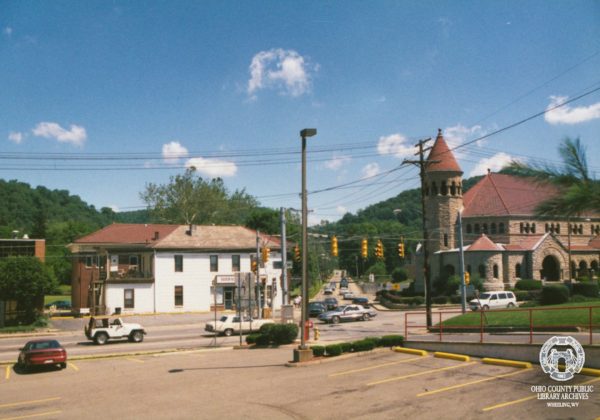
That positioning earned Wheeling its 19th century nickname, the Gateway to the West.
And the flow of movement has not stopped.
When Interstate 70 came through Wheeling in 1955, it once again positioned the city as a crossroads.
“Interstate 70 still keeps us very relevant on the map today,” Stanton says. “We have so many people coming through our area. They see it, they stop, they stay, they visit our local establishments, restaurants, businesses. Interstate 70 is just as important today for us.”
From Farmland to Front Porches
As Wheeling expanded, so did its footprint. What we now consider established neighborhoods were once rolling farmland.
“That’s why you have different little suburbs of Wheeling, like Woodsdale and Dimmydale,” Stanton notes. “The National Road helped expand those neighborhoods and provide access. A lot of times, it was farmland sold off in individual lots to create neighborhoods that still carry the founders’ names.”
Take Woodsdale, for example.
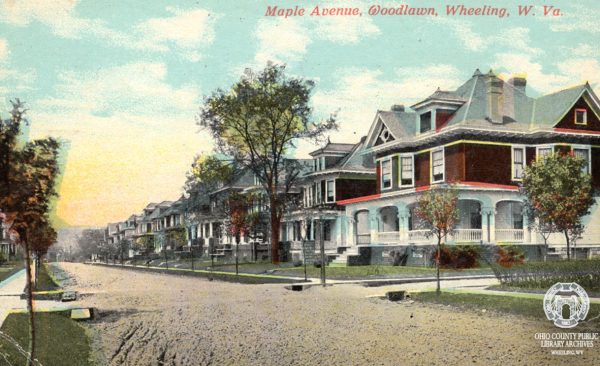
Once owned by Archibald Woods, a Revolutionary War veteran from Virginia who died in 1846, the land would later transform into one of Wheeling’s most recognizable residential districts. Officially founded in 1888, Woodsdale evolved from farmland into the tree lined neighborhood many families call home today, a quiet reminder of how the city’s past was literally parceled into its future.
Living in History
For some residents, that history is not abstract. It is personal.
Freshman Sadie Murphy, who recently moved to Wheeling from Long Island, New York, says the biggest adjustment was not just cultural. It was architectural.
“I think the best part of coming here is my house itself,” Murphy says. “It’s a part of history, and it relates to the Stifels, which is a big part of our community. I didn’t realize how big that really was until we moved here.”
Her home, more than 100 years old, was once known as Stamm Inn, a place where soldiers could rest and where large public speeches were held. Today, it stands as both a residence and a relic, quietly connecting present day Wheeling to its industrial and civic past.
A Modern Gateway
Wheeling has never been static.
Recent improvements through the Wheeling Streetscape Project, along with ongoing investment in places like Heritage Port, Centre Market, and the Wheeling Suspension Bridge, signal continued evolution. The city that once served as a launching point for westward expansion is still redefining itself, blending preservation with progress.
For students curious about the layers beneath their own neighborhoods, Mr. Stanton’s History of Wheeling class offers a deeper dive into the people, infrastructure, and decisions that shaped the Friendly City.
Because in Wheeling, history is not just something you read about. It is something you drive over, live in, and pass every single day.
