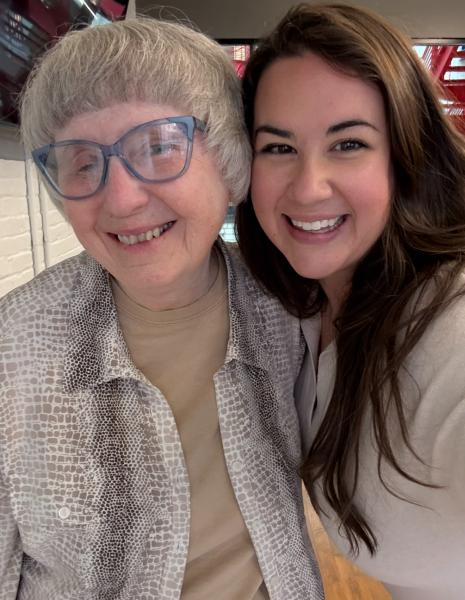

During Women’s History Month, we are often asked to reflect on the women who have shaped our communities. Sometimes those women are easy to name. Other times, they are the ones quietly doing the work behind the scenes, preserving stories, connecting people, and making sure the past is never lost. If you know Margaret Brennan, you know she is both.
And if you do not, it is hard to fully explain her without saying this first. To know Margaret is to appreciate her. Her warmth, her curiosity, and her deep love of Wheeling make her someone you do not forget. She is as sweet as she is sharp, as thoughtful as she is spirited, and always ready with a story, a question, or a piece of chocolate. At Wheeling Heritage, she is not just a historian. She is part of the rhythm.
Part of the Rhythm
Margaret stops in with ideas, clippings, updates on whatever she is currently researching, or simply to say hello. It never feels formal. It feels like a neighbor stopping by the porch. She talks about the past as if it is just within reach, as if the people who shaped Wheeling stepped out of the room for a minute. That perspective, what she calls seeing with “the eyes of history,” has defined her life’s work.
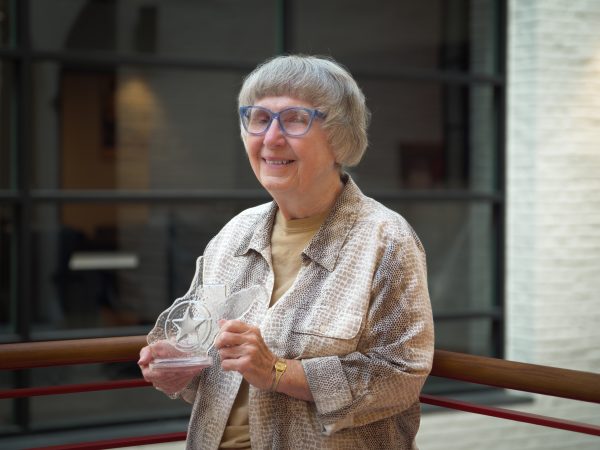
It is also what earned her the Virgil Lewis Award from the West Virginia Historical Society back in October, recognizing her outstanding contributions to preserving the state’s history. For Margaret, the honor was meaningful, but also humbling. “The more I learned about it, it is an honor,” she told me. “But to learn I was the first woman, when there are so many other women, that really struck me.” That reflection feels especially fitting this month, as we consider the many ways women have shaped, protected, and carried history forward.
A Path That Found Her
Margaret’s story begins in South Wheeling, where she was born in 1943 and raised in a family grounded in faith and storytelling. She did not set out to become a historian, but like many meaningful paths, it found her over time. After attending St. Joseph’s Academy, she entered the Sisters of St. Joseph of Wheeling at 18, imagining a future in education. It was a simple suggestion from another sister, who recognized her interest in history, that gently set her on a different course.
As a teenager, she moved to Warwood, a neighborhood she has called home for more than six decades and still speaks about with deep affection. It is a place where streets, families, and shared memories intertwine. That lifelong connection to place has shaped how she understands history, not as something distant, but as something rooted in community, relationships, and lived experience.
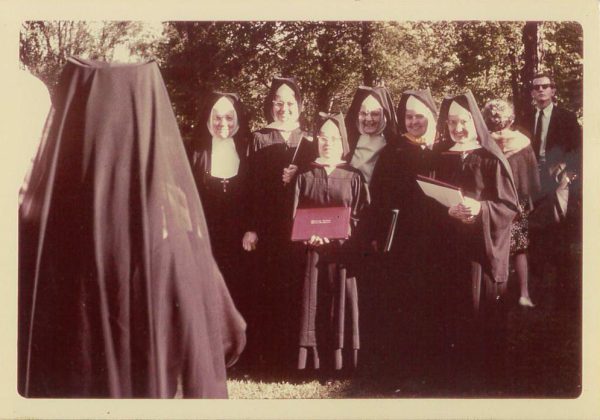
She followed that instinct, earning her degree from Wheeling College and continuing her studies at Duquesne University and West Liberty State College, later adding a master’s degree in history from West Virginia University and a Certificate of Public History. Her early years teaching were not exactly what she expected. Fresh out of college, she was sent to teach first grade in Clarksburg without formal training. “I was scared most of the time,” she admitted with a laugh. “I thought, I do not know how to teach reading.” Still, she figured it out, and that willingness to step into the unknown became a defining thread in her life.
From the Classroom to the Archives
Margaret went on to spend 11 years teaching social studies and history at Central Catholic High School, where she brought energy and heart into the classroom. “I would turn somersaults to get those kids to learn,” she said. “Those were beautiful years.” Eventually, her path shifted toward something new.
As the first archivist for the Diocese of Wheeling Charleston, Margaret built its archival system from the ground up, transforming scattered materials into something lasting. It was a turning point that brought her fully into the world of public history. “It is not just about displaying something,” she said. “It is about conserving it for the future.” That idea, that history is something we safeguard and not just showcase, has guided every project she has taken on since.
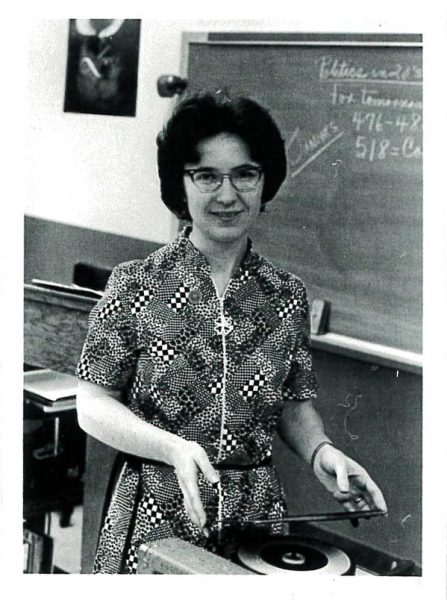
After studying public history at West Virginia University under historians like Dr. Barbara Howe, her work expanded across Wheeling in both visible and behind the scenes ways. She helped establish the history room at Mount de Chantal, built archival collections and displays at Wheeling Hospital, documented the history of the Crittenton Home, contributed to the Wheeling Symphony’s historical record, and preserved materials tied to Brown Brothers Tailors. Each project was different, but the purpose remained the same. It was to make sure the story does not disappear.
History in Plain Sight
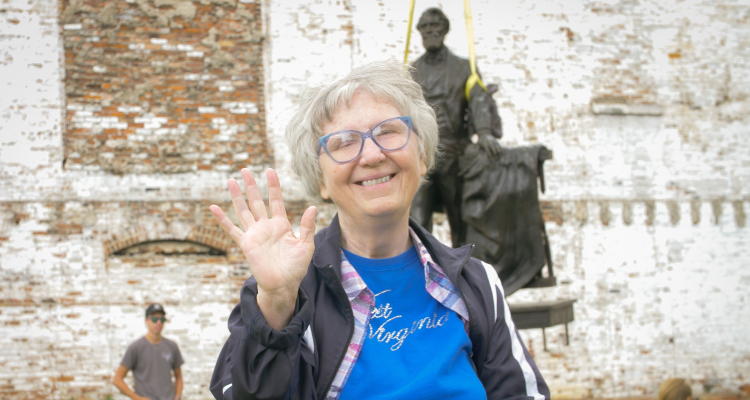
Some of Margaret’s most visible contributions stand in plain sight, woven into the everyday landscape of Wheeling. She played a key role in bringing the statue of Francis H. Pierpont to Independence Hall. She also helped lead the effort to relocate Wheeling’s Civil War monument from Wheeling Park to a place where people would actually encounter it. She championed the addition of a statue honoring Governor Arthur I. Boreman.
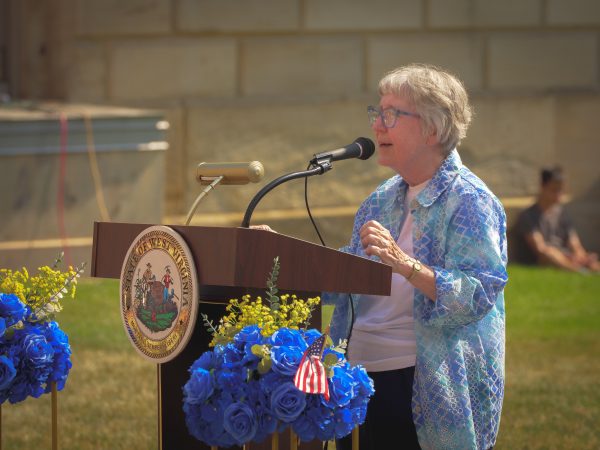
These efforts required a belief that history belongs in public view. Margaret is always quick to point out that none of it happens alone. “You always have to have a group,” she said. “You always have to have support.” Still, her influence is undeniable, helping shape not just what Wheeling remembers, but how it chooses to remember it.
Seeing Wheeling Differently
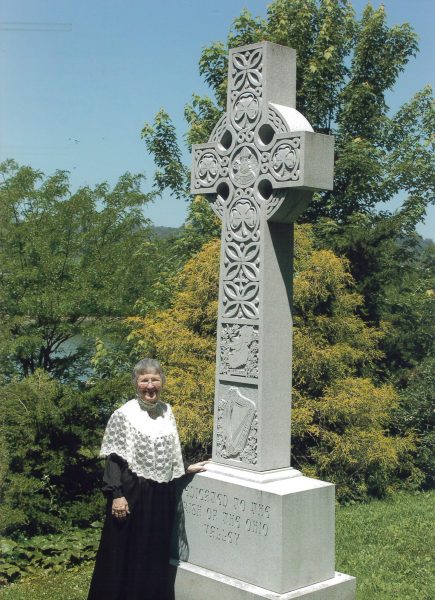
What stands out most about Margaret is not just what she has done. It is how she sees. She says she can stand along the river and picture Native Americans crossing toward Fort Henry. On Main Street, she sees Buffalo Bill’s Wild West show moving through town. At 10th Street, she acknowledges the painful history of the slave auction block. For her, history is not distant. It is layered into the ground beneath our feet.
The ground, the land, is the key. You have to know who was here before you to be fully rooted in your life.
It is a perspective that invites others to slow down, look closer, and understand the places they pass every day in a deeper way.
A Shared Story
Margaret believes that all stories matter, the joyful and the difficult alike. “A shared bond of history helps to make us a stronger people,” she said. “I firmly believe that.” It is a simple idea, but one that has shaped a lifetime of work.
During Women’s History Month, it is easy to focus on bold names. Margaret Brennan reminds us that some of the most meaningful impact happens over time, through steady dedication and genuine care. She has shaped how Wheeling remembers itself, not for recognition, but because she loves it.
And because of that, Wheeling knows itself a little better.