By Celebrating Wheeling’s Rich Labor Heritage
For the past 8 years, the WALS Foundation, in partnership with the Ohio County Public Library, has hosted what we call the Reuther-Pollack Labor History Symposium on the Saturday of Labor Day weekend. We think the date of our symposium is appropriate as it is near the birthday of Wheeling’s internationally known labor and social justice leader Walter P. Reuther (September 1, 1907), the culmination of the Battle of Blair Mountain (September 2, 1921), and Labor Day. The idea is to take a look at the latest scholarly research being done in the field of labor history, and to apply it to our present situation, which now grows increasingly dire.
But it’s reasonable to ask why we believe Wheeling is, not only the appropriate host city, but also the best host city for this event.
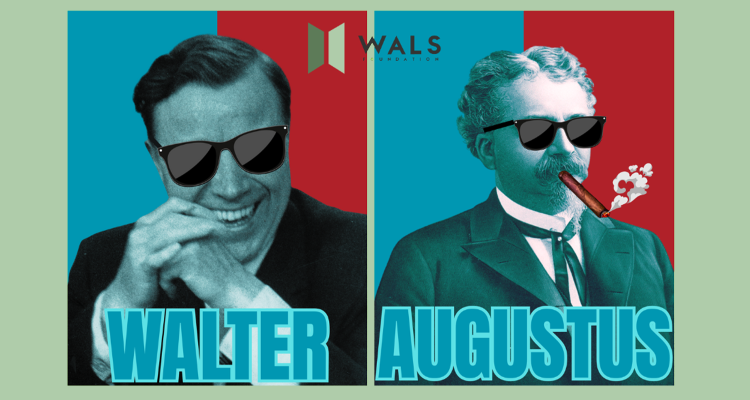
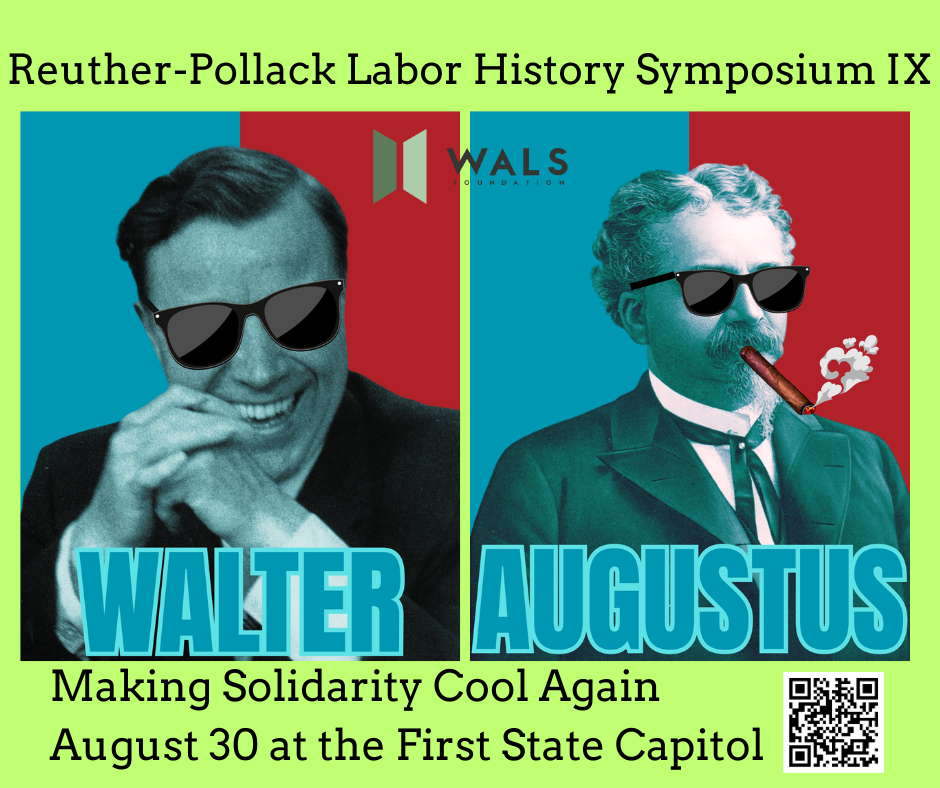
The Reuther-Pollack Labor History Symposium was named in honor of two sons of Wheeling who were shaped by our town’s historically strong work ethic and dedication to unionism and whose life and times we think symbolize the best of organized labor and enlightened ownership: Walter P. Reuther and Augustus Pollack. And the attitudes of these two men toward workers’ rights were nourished by the same deep roots in Wheeling’s history.
As a rough-and-tumble frontier outpost, a brawling transportation and manufacturing hub, and the rebellious host city for the “secession from secession” that led to West Virginia statehood, Wheeling has always been a hard-working, hard-playing, tough, and defiant city. And nothing epitomizes that spirit more colorfully than Wheeling’s labor history. The city attracted droves of migrant laborers and immigrants in search of opportunity in industries making products like iron and steel, nails, glass, pottery, stogies and beer. Others sought work on the wagons, trains and steamboats endlessly hauling such products, and the raw materials needed to produce them, into and out of town by river, road, and rail.
Led by large numbers of German immigrants (like Reuther family patriarch, Valentine), influenced by socialist theory, Wheeling’s workers organized for better pay, hours, and working conditions. By the turn of the century, Wheeling was home to an array of labor unions representing every trade and profession from butchers and bartenders to brewers, bricklayers and horseshoers. From the Amalgamated Association of Iron and Steel Workers to the International Union Brewery Workmen of America and the National Stogiemakers’ League, most of these organizations were represented in West Virginia’s (and America’s) largest central labor union, the (still extant) Ohio Valley Trades and Labor Assembly, membership of which was comprised of 4,000 Wheeling workers from 40 different unions. The OVTLA was progressive in its platform regarding equal pay for men and women and woman suffrage, while condemning antisemitism in Russia. Additionally, OVTLA featured two African American delegates and one female officer prior to 1900! The OVTLA, in fact, is one of the sponsors of the 9th Reuther-Pollack Labor History Symposium coming up on Saturday, August 30, and we are proud and honored to have them on board, along with Iron Workers Local #549.
Anyway, back in 1903, these groups lobbied intensely, and successfully, against a Carnegie library being built in Wheeling. This was in solidarity with the victims of the Pittsburgh Homestead Strike of 1892, their brothers in the Amalgamated Association of Iron Steel and Tin Workers. This is why Wheeling’s library (the good old Ohio County Public) does not have Carnegie in its name today. Wheeling’s working class neighborhoods like East and South Wheeling, had organized to prevent the “disgraceful monument” to the “Robber Baron” Andrew Carnegie. One of the organizers, twenty-two year old Valentine Reuther, drove a beer wagon for Schmulbach Brewery and became a labor leader, who, in 1919, took two of his sons, 11 year old Walter and 6 year old Victor to visit Eugene V. Debs while he was imprisoned in Moundsville for speaking out against the WWI draft. As they left the prison that day, Val Reuther wept for the gentle man he felt had been imprisoned for having empathy for the working class.
Shaped by such experiences, Valentine’s son Walter P. Reuther grew up to become not only one of the most influential labor leaders of the 20th Century, but also a leader in progressive social causes, marching for Civil Rights with Dr. Martin Luther King, fighting for universal healthcare, environmentalism, and economic justice for all Americans.
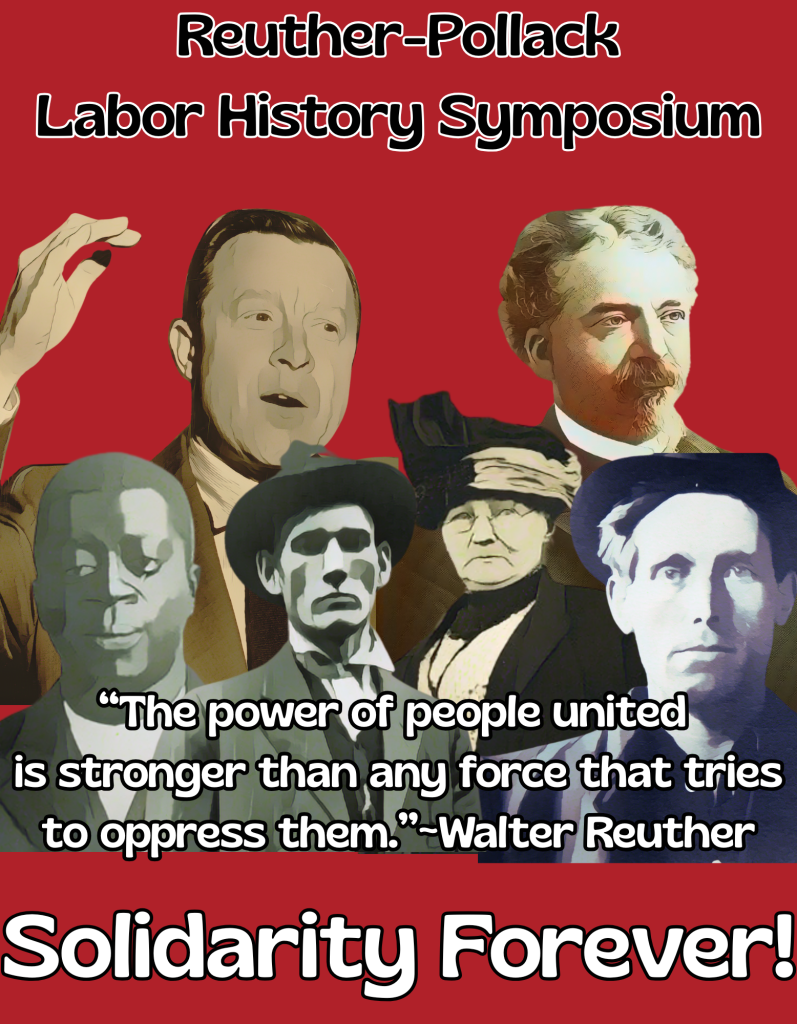
And many years before Walter Reuther was born, business owner and stogie maker Augustus Pollack earned the status of “friend of labor,” proof of which emerged when he died in 1906 (the year before Walter Reuther was born), as local labor unions funded a large monument in his honor. Depicting a handshake between an employee and an employer, the monument’s inscription reads: “ERECTED BY TRADE UNION MEMBERS OF UNITED STATES IN MEMORY OF AUGUSTUS POLLACK WHOSE BUSINESS LIFE AND ACTIONS WERE ALWAYS IN SYMPATHY WITH ORGANIZED LABOR.” The Pollack monument is thought to be the only memorial ever built by labor in honor of a business owner. It still stands at Heritage Port on the Wheeling Riverfront, just a few hundred feet from a bronze monument of Walter P. Reuther.
This symposium is dedicated to those two men and to the hard-working women and men of Wheeling, the Upper Ohio Valley, West Virginia, and all of Appalachia, whose spirit and toughness they represent. [Schedule QR code]
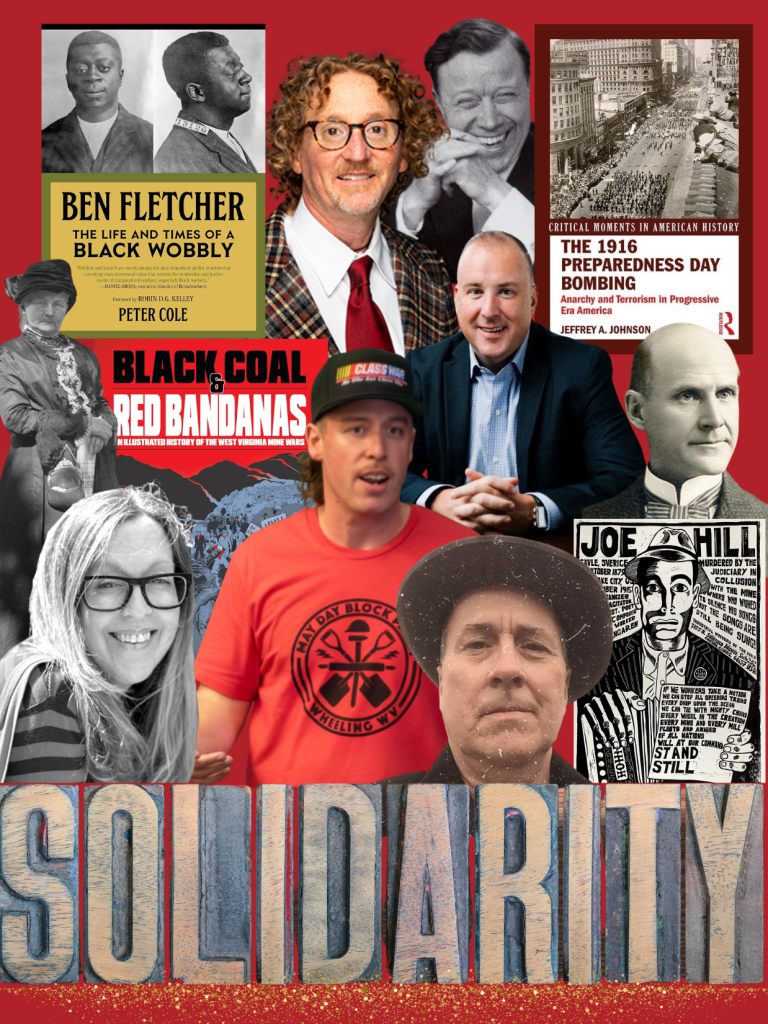
 The guests at the ninth version of our symposium will discuss some of the most interesting and neglected aspects of West Virginia and the nation’s labor history, such as the Battle of Blair Mountain, and the early, more radical Industrial Workers of the World (IWW or “Wobblies”). The
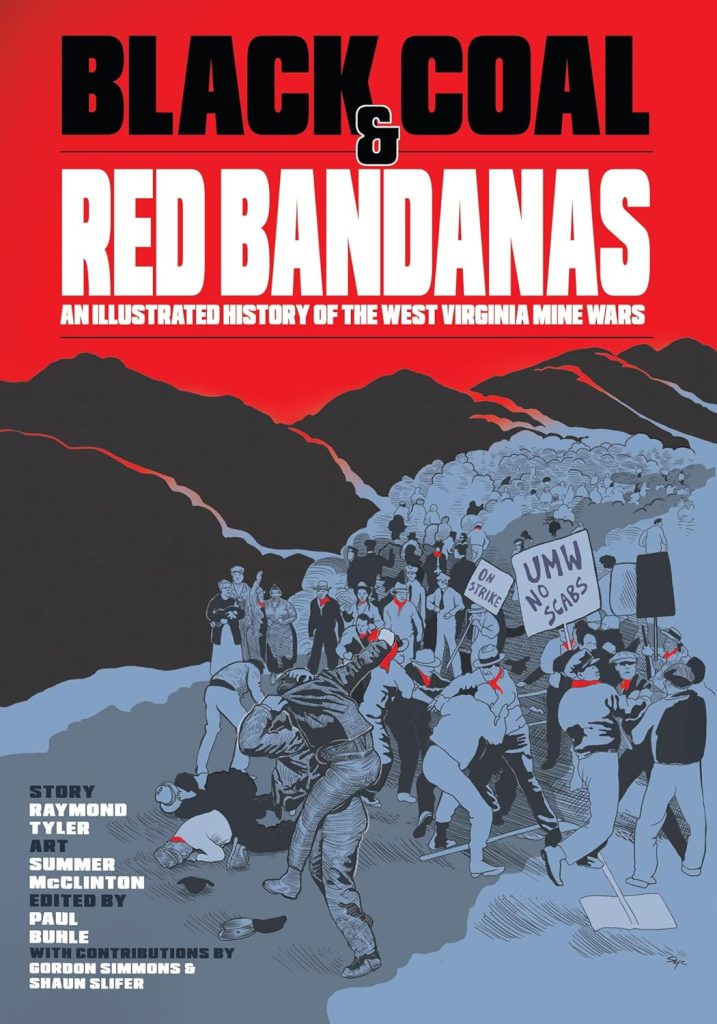
 Blair saga was conveniently omitted from most West Virginia history texts. But recently, numerous worthy efforts have been made to reclaim this neglected or outright ignored history. Prominent among them is the unforgettable new graphic history, Black Coal and Red Bandanas: An Illustrated History of the West Virginia Mine Wars. Written by Raymond Tyler and illustrated by Summer McClinton, this vital little book was published in 2024 by PM Press.
It covers, as only an illustrated book can, the early visits to West Virginia by Mother Jones. Readers are taken through the profound injustices of early mine work, including payment by the ton in worthless scrip, company-owned stores where miners were kept in debt, ramshackle company housing, weaponized evictions from same, the violent and often murderous mine guard system, child labor, and hazardous working conditions. We also learn what it meant to wear the red bandana and the true meaning of the word “redneck” – what should now be a source of pride rather than shame. You also learn about Smilin’ Sid Hatfield, the hero of Matewan.
Those interested in the book can learn more about it and, in fact, hear directly from the author and illustrator, who will both be presenting at the symposium. You can also learn more about Smilin Sid and the Battle of Matewan the following Tuesday, Sept. 2 by attending the Library’s first ever Labor Film Festival. The 1987 John Sayle’s classic “Matewan” will be screened starting at 3 PM in the Harold E. Vitalie Auditorium. See the full schedule here: (QR Film fest)
It’s also important to remember that Walter was not the only important Reuther. His little brother Roy was another Wheeling man who did his part as an organizer for the UAW and as a Civil Rights warrior. In fact, you can meet Roy’s son and Walt’s nephew, Alan Reuther, again at the First State Capitol the Friday evening, August 29. Alan will be in town to promote his new book about his late father, Roy Reuther and the UAW: Fighting for Workers and Civil Rights, brand new from Michigan State University Press. Get yourself a signed copy at the event.
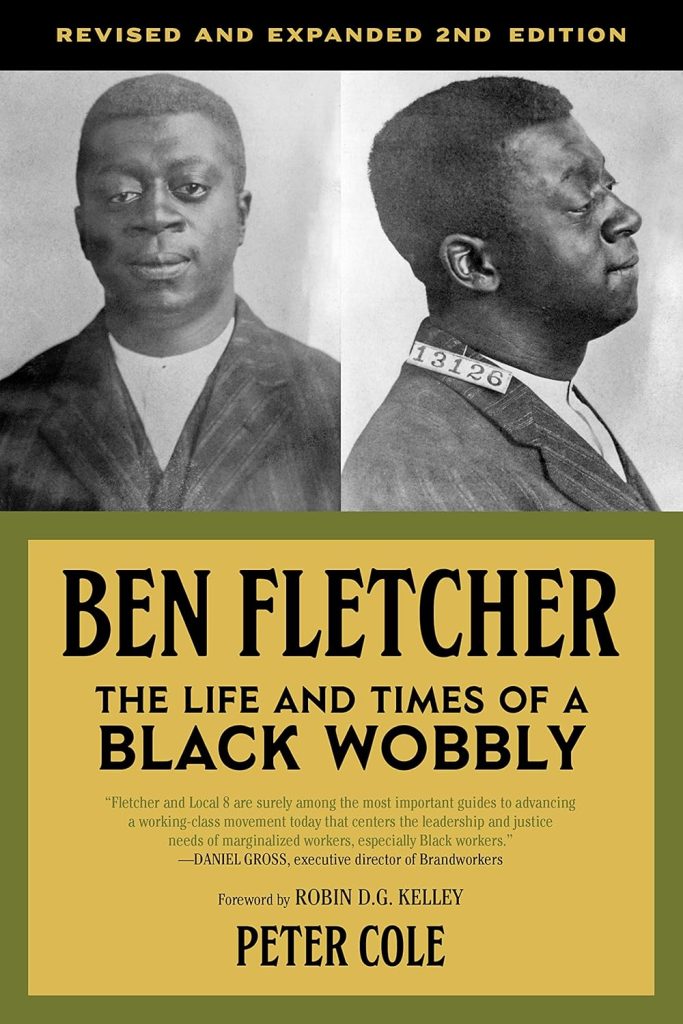
Back to Saturday, we’ll also hear from Dr. Peter Cole, a Professor of History at Western Illinois University, who edited a book about a brilliant union organizer and a humorous orator, Benjamin Fletcher (1890-1949) an important African American member of the IWW back in the day, who spoke fearlessly about things now dismissed as DEI. And Dr. Jeffrey Johnson, Professor of History at Providence College in Rhode Island, who will discuss the summer of 1916, when the dubious conviction of a San Francisco labor organizer after an attack on a patriotic parade raised serious questions about extremism, pluralism, and freedom in the U.S. Some of that might sound familiar. Wheling’s own Dr. Hal Gorby will lead an informative labor tour to Heritage Port and James Schnedier of Pittsburgh will tell us about his new documentary film about Wobbly Joe Hill, a union organizer who tried to change the world with his music and died for it. And finally, we’ll hear from Wheeling’s own Emmy Award-winning podcaster and reporter, John Russell, the self-proclaimed river-rat redneck, who will discuss the nexus between union organizing and democracy.
It is our hope that revisiting Wheeling’s rich labor past will reconnect that vibe to the present and the future, making solidarity, not just cool again, but embraced and celbrated again, as the best way forward, in fact, the only way forward that promises a seat at the table for everyone.
-
Seán Patrick Duffy is the adult programming coordinator at the Ohio County Public Library and the executive director of the Wheeling Academy of Law and Science (WALS) Foundation at the First State Capitol in Wheeling. He earned a bachelor’s degree in history and an MBA from Wheeling Jesuit University and a JD from the Washington College of Law at the American University. He is the author or editor of four books and numerous articles on local history and the editor of the Upper Ohio Valley Historical Review. One of the founders of ArchivingWheeling.org, Duffy is vice president of the West Virginia Independence Hall Foundation Board.
View all posts