
For Jes Arnold, art has always been about more than creating something beautiful. It has been about creating connection.
The founder of Card Art by Jes built her business around a simple guiding idea: spreading joy. Through whimsical watercolor artwork, handmade greeting cards and innovative seed paper creations, Arnold has found a way to blend creativity, sustainability and a lifelong love of nature into something deeply personal and distinctly her own. What began as a creative outlet has grown into a small business rooted in community, conservation and the belief that even small, handmade things can leave a lasting impact.
That idea of connection shows up in everything she creates, but it also traces back to something very ordinary: greeting cards from her grandmother. Arnold remembers receiving cards filled with heartfelt messages, but often the pre-printed words didn’t quite fit what her grandmother wanted to say. She would cross out phrases, rewrite lines and make each card her own. Arnold loved them for exactly that reason. They were imperfect, personal and full of humor and care, and many of them were saved as keepsakes long after the moment had passed.
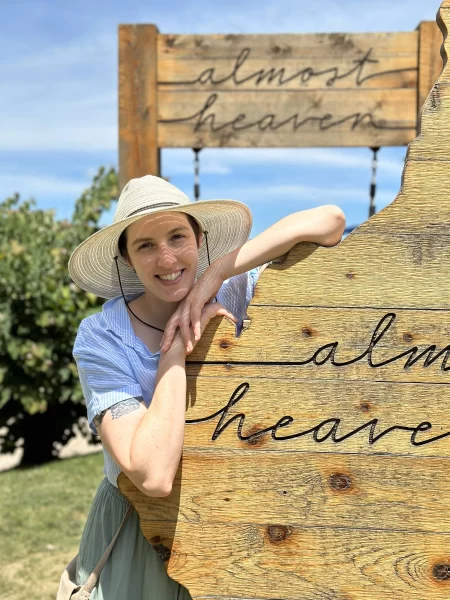
Those cards became the inspiration for her own work. Rather than producing generic greetings, she wanted to create something that felt personal from the start. Cards that could be finished by the sender, shaped by their own words, and even meaningful enough to display or frame. Today, that philosophy remains at the heart of Card Art by Jes, where each piece is designed not just to be given, but to be experienced.
“My ultimate hope in sharing my creations is that they will create opportunities for connection,” Arnold said.
From paper scraps to seed paper
One of Arnold’s most distinctive creations came from a very practical place: leftover paper.
Because every card is handmade, scraps naturally begin to pile up. Instead of discarding them, Arnold started exploring ways to recycle the materials into something new. That curiosity led her into the world of handmade papermaking, where she discovered something that immediately changed the direction of her work: seed paper.
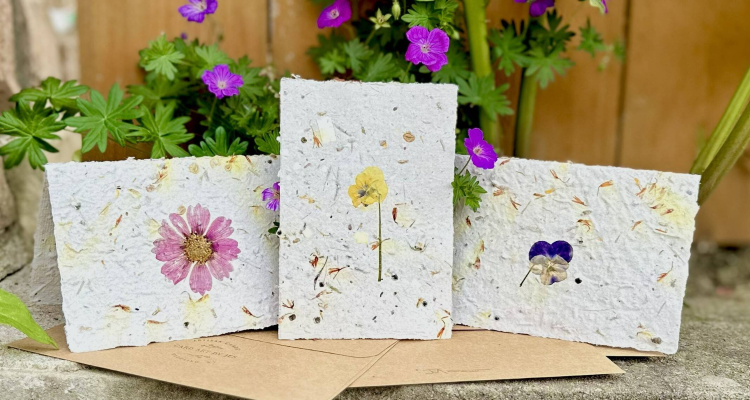
By embedding wildflower seeds into recycled paper pulp, she realized she could turn waste into something that didn’t just reduce impact, but created new life. What started as experimentation with seed paper notecards eventually evolved into a more accessible product, small tear-away seed paper packets wrapped in eco-printed covers that could be included in cards or planted on their own.
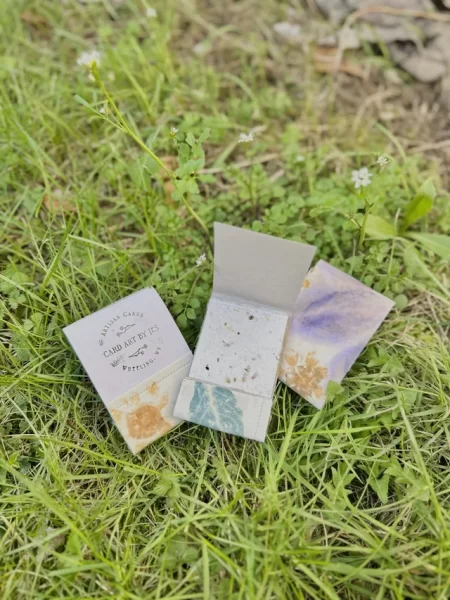
The process behind each packet is slow and hands-on. Arnold begins by collecting cardmaking trimmings and turning them into pulp, often letting the color of the scraps guide the direction of the final piece. From there, she mixes in seeds, flower petals and other natural materials before forming and pressing each sheet by hand. The paper then goes through a multi-day drying process before being assembled into finished packets.
Many of the final touches come through collaboration with her mother, Lisa Arnold, the fabric artist behind Wandering Fawn Stitchworks. Together, they create eco-printed fabric covers that wrap each packet, adding another layer of texture and artistry to the finished piece.
No two sheets ever turn out the same. The way fibers settle, petals land and seeds disperse creates natural variation in every batch, which is part of what Arnold loves most about the process. When the paper is finally peeled from its backing after drying, she often finds unexpected details waiting for her.
“Sometimes there are little surprises,” she said, “like a tiny bit of recycled paper text peeking through at the perfect place, or a particularly striking color pattern.”
Art shaped by nature and curiosity
Although her business now blends art, sustainability and entrepreneurship, Arnold’s path to this point has been anything but linear. With a background in biology, she spent years working in wildlife rehabilitation, animal shelters, zoos and sanctuaries before eventually transitioning into a completely different field as a union pipefitter. While those careers may seem unrelated, she sees them as connected through one common thread: working with her hands and paying attention to the world around her.
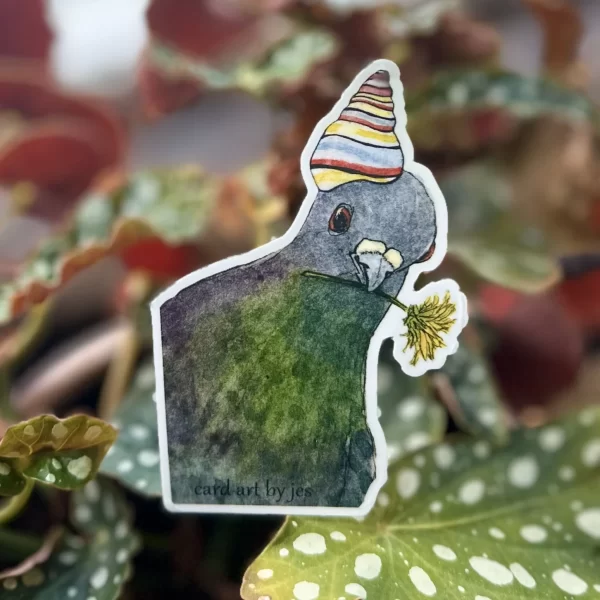
That connection to the natural world has always been present in her art as well. Arnold describes herself as “a little quirky, a lot nerdy,” and that personality comes through in her illustrations of playful animals and unexpected scenes. A pigeon wearing a shell like a party hat, punk-rock songbirds, a fish riding a bicycle and an okapi enjoying cake all appear throughout her work, reflecting both humor and curiosity.
Her inspiration traces back to childhood spent outdoors in western Pennsylvania, exploring woods, identifying insects and plants, and visiting parks and zoos. Those early experiences shaped a lasting sense of wonder that continues to influence her creative process today.
“I aspire to retain a childlike wonder for the world that has existed long before me,” she said. “All the forms of life, their interactions, and personalities are just too interesting not to stop and wonder at sometimes.”
Sustainability built into every piece
Sustainability is not an add-on for Arnold’s work. It is part of the foundation.
With her background in biology and years spent working closely with animals and conservation, she has always been deeply aware of environmental impact. When she built Card Art by Jes, she made a deliberate choice to ensure that both the materials and packaging reflected those values.
Her cards and seed paper products are made from recycled materials, and packaging is selected to be recyclable, compostable, reused or biodegradable whenever possible. Unlike many commercial greeting cards that rely on plastic coatings and non-recyclable finishes, her seed paper is designed to return to the earth and create new growth once planted.
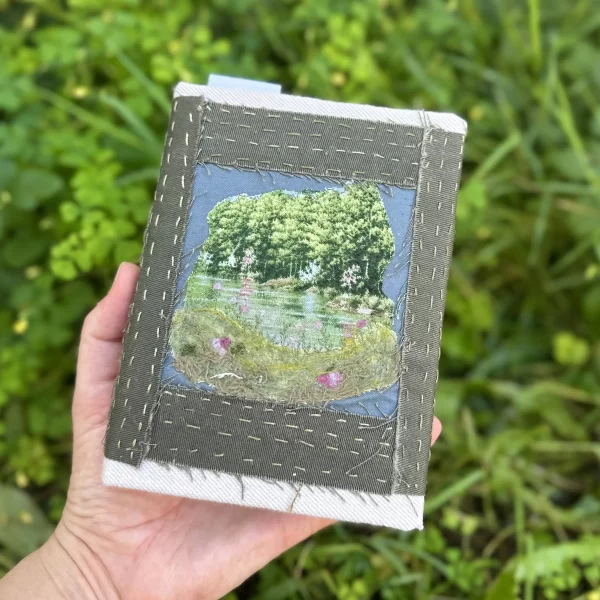
She is now working toward an even more ambitious goal: producing seed paper using native West Virginia wildflower seeds that she grows and collects herself. The hope is to create a closed-loop process where each sheet not only minimizes waste but actively supports local ecosystems.
“Our society has a very destructive fingerprint on the earth,” Arnold said. “When I formed this business, I knew I wanted to not only be eco-friendly however I could, but to inspire the same in others.”
Community, creativity and Handmade Holiday
While sustainability and creativity define the work, Arnold says the most unexpected part of her journey has been the community that formed around it.
As she began participating in local markets and working with small businesses, what started as sales opportunities quickly became something more meaningful. Over time, those connections grew into relationships with fellow makers, shop owners, baristas, customers and organizers who have supported her work from the beginning.
Anyone who has seen her at vendor events throughout the region, including Wheeling Heritage’s Handmade Holiday market, knows she brings that same energy to every interaction. She is a familiar face at local markets, always with a smile, often stopping to talk with customers or fellow vendors as if they are already friends. That warmth has become part of her presence in the local maker community, and part of what makes her work so recognizable beyond the artwork itself.
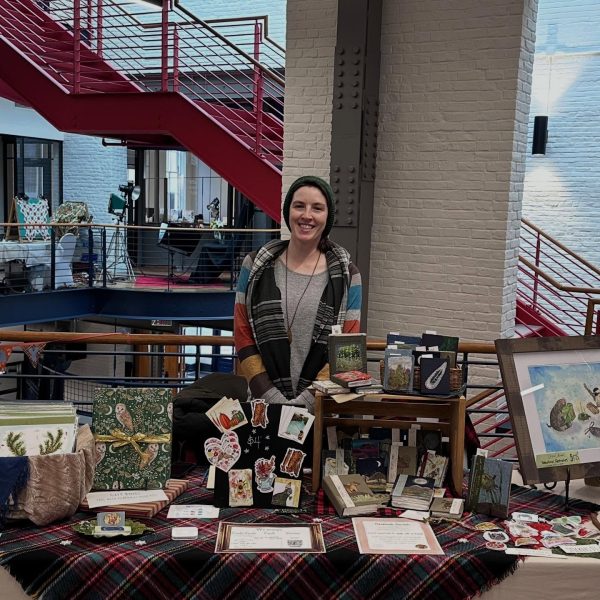
Working through events like Handmade Holiday has also deepened that sense of connection. Being surrounded by other artists and small business owners has reinforced the idea that her work exists within something larger than herself, a shared effort to keep creativity and local entrepreneurship alive and visible in the community.
In just a few years, Arnold says those relationships have become one of the most meaningful parts of running her business.
“I have been blown away by the support of our community for art and small business,” she said. “The encouragement and support of Wheeling’s inhabitants has been the most unexpected and heartwarming aspect of turning my creative outlet into a small business.”
What she hopes lasts beyond the bloom
At the center of it all, whether it is a handwritten card, a piece of seed paper or a field of wildflowers growing months later, Arnold hopes her work creates something that lingers.
Not just a product, but a moment. A memory. A reason to connect.
When someone receives one of her cards or plants one of her seed paper packets, she hopes it becomes part of a larger story shared between people, whether that is a note saved on a shelf or flowers grown alongside a child discovering them for the first time.
She hopes it creates a conversation. And, in its simplest form, a little more joy.
Shop, browse, or learn more at her website: https://card-art-by-jes.square.site/