

As February comes to a close, so does a meaningful month of reflection, storytelling, and preservation.
Throughout the month, the YWCA Wheeling, the Ohio County Public Library, and Wheeling Heritage worked together to share the stories of Wheeling’s Black community, told in their own words.
While we highlighted portions of the conversations in three social media posts over the past several weeks, this collaboration now has a permanent home. The full oral history sessions are available online, offering the community a central place to listen, learn, and reflect.
Capturing Stories in Real Time
Recorded on February 27, 2025, the two part oral history brings together longtime Wheeling residents to reflect on their lived experiences, from segregation and integration to neighborhood life, schools, churches, and the impact of urban renewal.
Session One
Speakers Thomas Miller, Darlene Stradwick, Ron Scott, and Sean Duffy share candid memories of growing up Black in Wheeling in the mid 20th century. They speak about being barred from restaurants, theaters, swimming pools, skating rinks, and playgrounds, or allowed access only on designated days and in inferior spaces.
They also reflect on the strength of close knit neighborhoods, the grounding presence of churches, and the formative role of Lincoln School before integration introduced both opportunity and new forms of racism. Their stories underscore just how recent this history is and how deeply it shaped identity and community life.
Watch Session One
Session Two
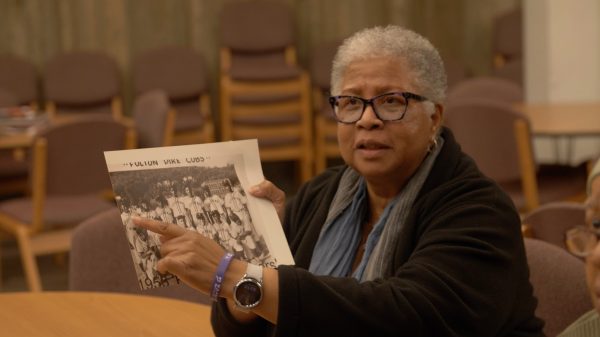
The second session expands the conversation to include Brenda J. Sparksman and Linda J. Scott. Using historic photographs as prompts, participants identify neighbors, streets, and landmarks, from Morrow Street and Chapline Street to Center Wheeling and the Pythian Building.
Through humor, nicknames, and shared memories, the group reconstructs everyday life across generations. They recall institutions such as Lincoln School and Clay School, local churches that anchored the community, and gathering places that once served as social and cultural hubs. They also speak honestly about the impact of urban renewal, demolished buildings, and the loss of neighbors and historic spaces.
Together, these conversations reveal how tightly woven Wheeling’s Black community has been and how deeply place, relationships, and shared experience shaped identity.
Watch Session Two
A Permanent Place to Listen
While archival materials remain available through the Ohio County Public Library, this oral history project offers something distinct. It allows listeners to hear the stories directly from those who lived them.
The full sessions are available online through the Ohio County Public Library’s website
As we conclude the month, this is not the end of the conversation. It is a continuation.
By working together, the YWCA of Wheeling, Ohio County Public Library, and Wheeling Heritage have created a shared space where these stories are preserved, accessible, and honored. In doing so, they remind us that understanding Wheeling’s history means listening to the voices that shaped it.